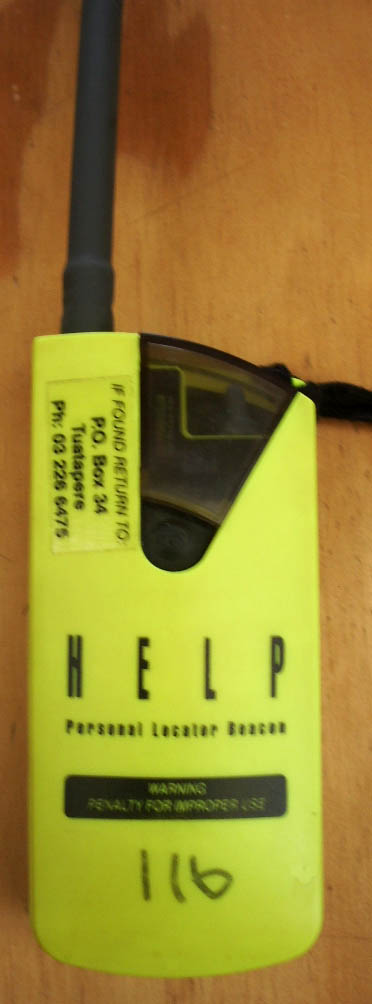
Emergency Communication Devices for Remote Canoe and Kayak Routes
Most kayaking and canoeing in Canada happens within a short paddle of a shoreline where a cellular signal is available. But a meaningful portion of routes — northern river systems, coastal passages on Vancouver Island or Labrador, extended trips in Shield country — put paddlers well beyond the range where a phone call can summon help. For those areas, the choice of emergency communication device can determine whether a serious injury or capsize becomes a recoverable situation.
Four categories of device are relevant for paddlers: personal locator beacons (PLBs), satellite communicators, VHF marine radios, and non-electronic signalling tools. Each has a distinct role, a distinct cost, and a distinct set of conditions under which it performs reliably.
Personal Locator Beacons (PLBs)
A PLB transmits a 406 MHz distress signal via the Cospas-Sarsat satellite network when manually activated. The signal includes a unique identifier registered to the owner and is relayed to the National Search and Rescue Secretariat, which coordinates a response. In Canada, the responsible coordinating agency is the Joint Rescue Co-ordination Centre (JRCC).
Key characteristics for paddlers:
- No subscription fee — the device transmits for free once registered with the Canadian Beacon Registry at canadianbeaconregistry.forces.gc.ca
- Battery life of 24–48 hours of continuous transmission after activation
- GPS-equipped models transmit position within 100 metres, accelerating rescue response
- No two-way communication — you can signal distress but cannot send or receive messages
- Designed for single use per deployment; the unit must be returned to the manufacturer for battery replacement and recertification after activation
For canoeists and kayakers who do not need regular check-in communication with people at home, a PLB is the most cost-effective and reliable distress device available. The absence of a subscription removes one failure mode — a lapsed account — and the Cospas-Sarsat network has global coverage including polar and maritime regions where satellite messenger networks have gaps.
Register your PLB before the trip, not the day of. An unregistered beacon delays response by requiring search and rescue to identify the device owner through international databases. Registration in Canada takes approximately 10 minutes online and is free.
Satellite Communicators
Devices such as the Garmin inReach series and SPOT communicators use low-earth orbit satellite networks — Iridium or Globalstar respectively — to provide two-way text messaging and GPS tracking from anywhere on the planet's surface.
Differences from PLBs that matter for paddlers:
- Two-way messaging allows check-ins, route updates, and weather information to be exchanged
- Monthly subscription required; plans typically range from CAD $15–70/month depending on message volume
- Can be used for non-emergency communication, which increases the practical value on longer trips
- SOS function connects to a private response centre (GEOS, IERCC) rather than directly to a government JRCC; the response centre then relays to official SAR
- Coverage depends on network: Iridium covers the entire globe including poles; Globalstar has gaps in polar regions
On a river route where a paddler wants to send daily position updates to family, or where a group is splitting into teams on different tributaries and needs to coordinate, a satellite communicator provides functionality a PLB cannot. The subscription cost is manageable for regular paddlers who use the device on multiple trips per year.

VHF Marine Radios
A handheld VHF marine radio transmits on marine frequencies, including Channel 16 — the international distress and calling channel monitored by the Canadian Coast Guard and many commercial vessels. For coastal paddlers within range of marine traffic or a Coast Guard station, VHF radio is a fast, direct communication channel that does not depend on satellites and allows real-time voice contact.
Range limitations are significant: a handheld radio transmitting at 5 watts typically achieves 5–8 nautical miles to another vessel or coastal station, affected by terrain and antenna height. On a fjord or between islands with high relief, line-of-sight range can be substantially reduced. VHF is most useful on coastal routes in British Columbia, the Great Lakes, and tidal waterways where marine traffic is present.
For inland river and lake routes in Canada's north, VHF provides limited value because there is rarely a monitoring station within range. In those environments, a PLB or satellite communicator is more appropriate.
Practical Considerations
- Waterproof rating: look for IPX7 or IPX8 submersion ratings on any radio used for paddling
- Carry the radio on your person — in a PFD chest pocket — rather than stored in a dry bag. In a capsize, you need it immediately, not after you retrieve and open a bag.
- Battery management: a fully charged radio should last 8–12 hours in receive-heavy use. Carry a spare battery or charging cable for trips longer than two days.
Non-Electronic Signalling
Electronic devices are primary, but a signal mirror, a whistle, and a brightly coloured paddle float or dry bag serve as backups that function without battery power and survive submersion without question.
Signal Mirror
A retroreflective mirror can be seen by aircraft at 10–15 km distance under clear skies. On a route where aircraft traffic is possible, a signal mirror weighs 60–80 g and provides a signalling capability that no battery-dependent device can match in terms of reliability after an extended swim.
Whistle
Transport Canada requires a sound-signalling device on all vessels under 12 metres. For kayakers, a pealess whistle attached to the PFD is the standard. Fox 40 and similar pealess designs function when wet and at freezing temperatures without degradation. A standard plastic whistle with a pea (ball bearing) may not function if the ball freezes in the track.
Choosing a Device for Your Route
The appropriate choice depends on three factors:
- Whether two-way communication has value: If check-ins with family or guides are expected, a satellite communicator justifies its subscription cost. For solo technical routes where the priority is a reliable distress signal, a PLB is simpler.
- Proximity to marine traffic or Coast Guard: Coastal paddlers on established routes should carry VHF. Remote inland paddlers may not benefit from it.
- Trip duration and cost tolerance: A PLB purchased once is the lowest long-term cost option for paddlers who do several remote trips per year but don't need two-way communication.
Many experienced paddlers carry both a PLB and a satellite communicator. The PLB is the registered emergency distress device; the satellite communicator handles day-to-day communication and weather updates. In a serious emergency, the PLB is activated because it connects directly to government SAR infrastructure rather than through a commercial intermediary.
Related Reading
Communication devices should be carried on your body, not in your hull. The guide to dry bags and waterproof storage covers what goes in immediately accessible versus deep-stowed storage. The guide to choosing a PFD addresses the chest pocket placement options that keep a radio or PLB within reach without removing the vest.