Choosing a PFD: Fit, Buoyancy, and Paddle Sport Ratings
A personal flotation device is the single piece of safety equipment that does nothing — until you need it completely. For paddlers in Canada, the choice is regulated by Transport Canada but complicated by the variety of styles on the market and the range of conditions in which kayaking and canoeing take place. A PFD selected for flat-water lake touring behaves differently than one intended for moving water or open coastal routes, and fit matters more than most beginners expect.
This guide covers the Transport Canada classification system, how buoyancy ratings translate to real-world performance, and the practical fitting considerations that determine whether a PFD will actually stay in place during a capsize.
Transport Canada PFD Classifications
Transport Canada recognizes four types of personal flotation devices under the Small Vessel Regulations. Each type is rated by the minimum buoyancy it provides, measured in Newtons (N).
Type 1 — Offshore Life Jacket (≥100 N)
Designed to self-right an unconscious wearer in rough open water. Highly bulky and restricts paddle stroke range significantly. Not common among recreational kayakers but required on certain commercial or offshore routes. The collar and inflation chambers extend high around the neck, which interferes with a forward paddle stroke.
Type 2 — Near-Shore Buoyant Vest (≥75 N)
Rated for inshore and sheltered water use where rescue is expected quickly. Provides face-up support for a conscious wearer and is moderately less bulky than Type 1. Some older designs in this category fit poorly for paddling movements and are better suited to boating than to active stroke-based water sports.
Type 3 — Flotation Aid (≥50 N)
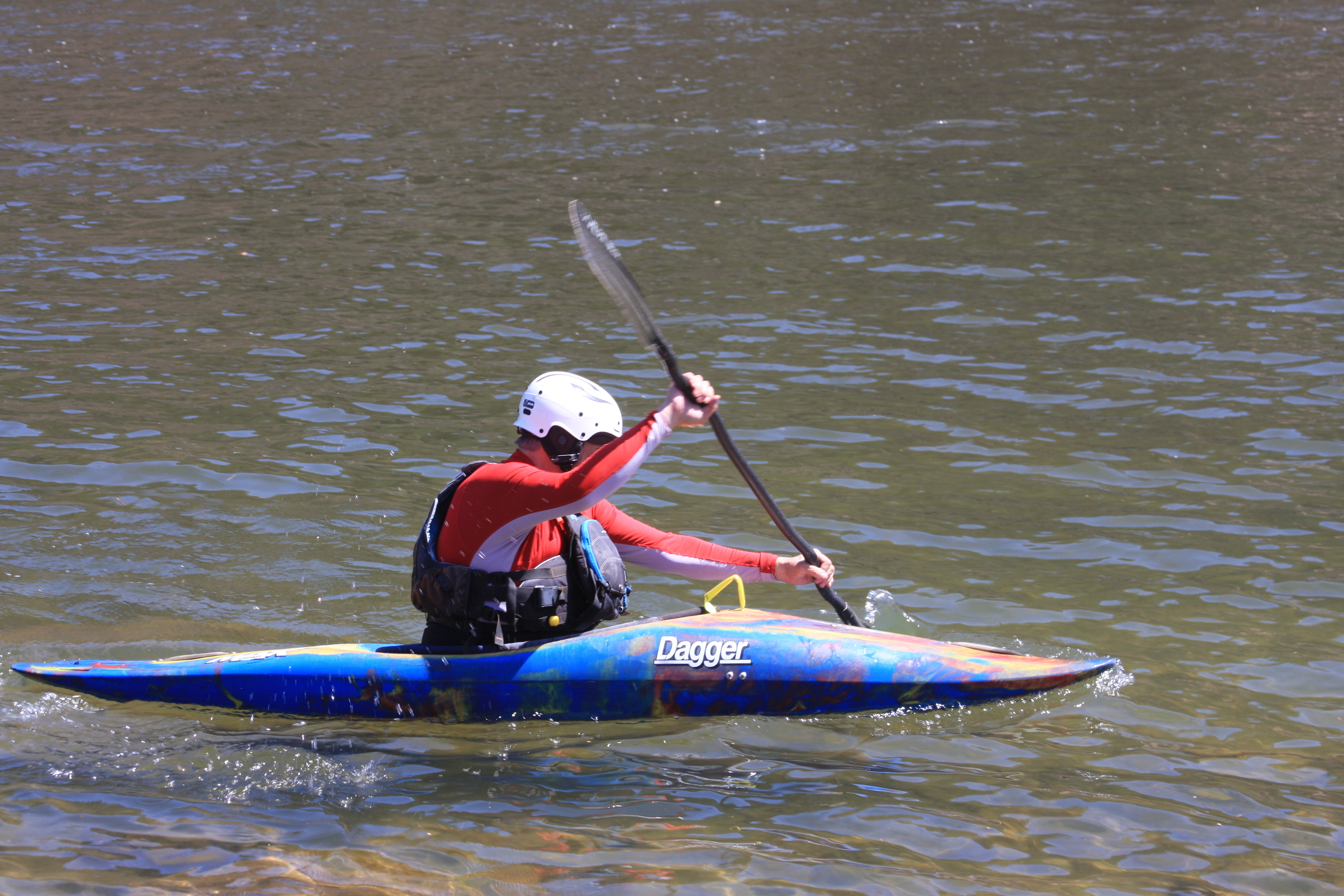
The category most recreational paddlers use. Type 3 vests are designed for conscious wearers in calm or moderate conditions where self-rescue or assisted rescue is possible. They offer significantly better freedom of movement and come in paddle-specific cuts with lower front profiles, articulated shoulders, and shorter torso lengths that avoid contact with a kayak's cockpit coaming.
Type 4 — Throwable Device
Includes rescue rings and buoyant cushions. Not worn, not a substitute for a wearable PFD, but a required component of the safety kit on many vessel types. Useful for assisted rescue when a paddler is within throwing range.
Transport Canada requires that a wearable PFD or lifejacket be carried on board for each person on a recreational vessel. It does not legally require wearing it at all times — but paddling organizations and provincial safety guidelines consistently recommend wearing it, not just carrying it.
Buoyancy Ratings and Water Conditions
The Newton rating on a PFD indicates the upward force the device provides when fully submerged. A 50 N rating equates to roughly 5 kg of buoyancy. For context, a 70 kg person wearing street clothes and a 50 N PFD has enough positive buoyancy to keep their head above water — but not by a wide margin once waterlogged clothing adds weight.
Paddlers planning routes in cold water or remote areas often choose vests rated higher than the 50 N minimum, particularly when:
- Water temperatures are below 15°C, which increases the risk of cold shock and incapacitation
- The route involves open crossings where self-rescue may take several minutes
- The paddler carries a heavy gear load that increases the weight differential between the person and the water
- Surf or moving water conditions could disorient a swimmer after a wet exit
Paddle-Specific Design Features
A standard buoyancy vest designed for sailing or powerboating will restrict a forward stroke and cause chafing under the arms within an hour. Paddle-specific PFDs address this with several design choices that standard boating vests skip:
Low-Profile Front Panel
Keeps foam away from the chin and throat during forward-stroke body rotation. Essential for sea kayaking, where trunk rotation drives the paddle rather than arm strength. Without this, paddlers tend to hold the PFD down with one hand, removing it from their wrist grip.
Articulated Armhole Cut
An angled armhole that follows the natural position of the arm during the catch phase of a paddle stroke reduces the upward pressure that causes standard vests to ride up and compress the jaw. On poorly fitting PFDs, this is the most common cause of discomfort on trips longer than two hours.
Zippered Chest Pockets
Accessible without removing the vest for storing a whistle, compass, or folded route map. On kayaking trips in Canadian Shield country, having a whistle in an accessible pocket rather than clipped to a deck line can matter in a confused capsize scenario.
Adjustment Points
Quality paddle vests include at least three adjustment points: two shoulder straps and a waist or hip belt. Vests with only a single chest buckle shift position during movement and rarely stay seated against the body correctly. Canoeists who portage frequently benefit from designs that allow the PFD to be worn tightly without restricting breathing during carries.

Fitting a PFD Correctly
The correct size for a PFD is based on chest circumference, not body weight — though some children's and small adult models use weight ranges as a proxy. Most manufacturers publish a chest measurement chart. A properly fitted vest:
- Cannot be lifted above the chin when pulled upward by the shoulder straps
- Does not gap at the sides when the arms are raised overhead
- Allows a full forward stroke without the armhole digging into the armpit
- Sits low enough on the torso that it does not interfere with a kayak's sprayskirt
The shoulder-lift test is the simplest way to check fit: with all buckles fastened and adjusted snugly, grab the tops of the shoulder straps and pull upward. If the vest rises past the chin, it will come off during a capsize. Adjust the fit until this is no longer possible.
Cold Water and Additional Layers
PFD fit changes when worn over a wetsuit or drysuit. Paddlers who use thermal protection on cold-water routes should fit their PFD while wearing the base layers they plan to use — not over a t-shirt in a store. A vest that fits correctly over a 3 mm wetsuit may be too tight when layered over a drysuit with a mid-layer underneath, compressing the foam and reducing effective buoyancy.
Transport Canada maintains updated regulatory information at tc.canada.ca. The Paddling Canada organization also publishes equipment standards and instructor-led training opportunities for paddlers wanting to build rescue skills alongside proper gear selection.
Related Reading
If you paddle multi-day routes, the choices you make about dry bags and waterproof storage interact directly with PFD selection — particularly when it comes to weight distribution and access to emergency gear. For remote routes outside cellular range, emergency communication devices are the next critical safety layer after a properly fitted PFD.